

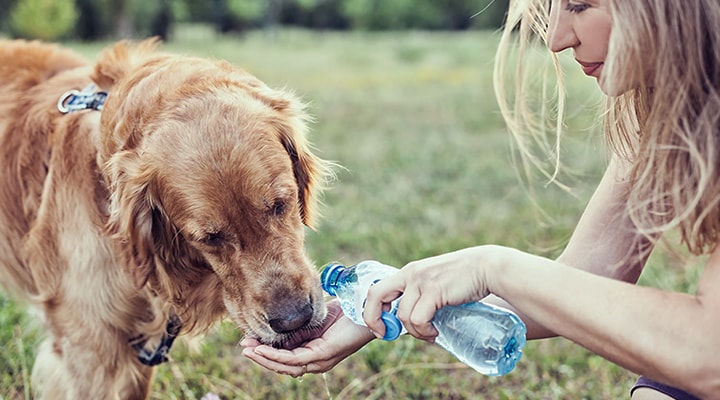
Summer is a great time to get outdoors with your pet. But just like you, your pet needs protection from the sun and heat. Here are four ways to keep your furry friend cool all season long:
-
Take it easy. On especially hot days, limit your outdoor walks to early morning or evening hours to keep your pet from overheating. When you do head out, touch the asphalt with your hand to make sure it’s not too hot — if it feels hot to you, it’ll feel hot on your pet’s paws. Also keep in mind that animals with short snouts can have trouble breathing in high humidity, so it might be best to take things slow.
-
Make some cool treats. While sugary popsicles aren’t a good snack for your pet, there are plenty of people foods Fido can eat — and plenty of ways to turn them into cool treats. Try making some peanut butter pupsicles by freezing a mixture of peanut butter and banana, or feed your kitten some cool cantaloupe. Be sure to talk to your vet before introducing any new foods into your pet’s diet.
-
Give him lots of shade and water. Even if you’d rather hang out indoors with the AC on high, your pet may still want to spend some time outside. Set up an area where he can find some protection from the heat and sun, and provide him with a big bowl of cold water. (Note: Traditional doghouses tend to get hot in the summer since they trap warm air inside. Make sure you set up another well-ventilated, shady area where your pup can play.)
-
Taking a ride? Leave your pet at home. You know how it feels to get into a hot car on a sunny summer day. But can you imagine if you had to sit inside with the air conditioning turned off (and on top of that, wearing a fur coat!), even for a few minutes? If you’re headed out to run errands on a hot summer day, leave your pet to chill at home when you hit the road — never leave him alone in your parked car, even with the window open.
Sometimes the heat makes your pet sick, even when you’ve tried your hardest to keep him cool and make your home a safe place to play. Signs of heat stroke include heavy panting, difficulty breathing, a rapid heartbeat, lethargy, and vomiting. If you notice any of these symptoms, get your pet into the shade or an air-conditioned space right away, make sure he drinks some cold water, and apply cold towels or ice packs to his head, neck, and chest. Contact your vet as soon as possible.
Did you know that pet health insurance can help cover unexpected vet bills? Learn more about what’s covered by pet insurance or get a free quote from Petsecure today This is an external link.
-
 February 19, 2025
5 must-dos for downsizing your home
Follow these tips to downsize your stuff before making the move to a smaller home. -
 January 15, 2025
How to safely use your wood burning fireplace this winter
Stay cozy and safe all winter long by following these tips on how to properly maintain and operate your wood burning fireplace. -
 December 11, 2024
The ultimate packing list for a winter hiking trip
Hiking doesn’t have to come to an end just because summer does. Learn how to properly pack for a safe winter hiking trip.
Are you a group insurance customer? Contact your group’s administrator or broker.