

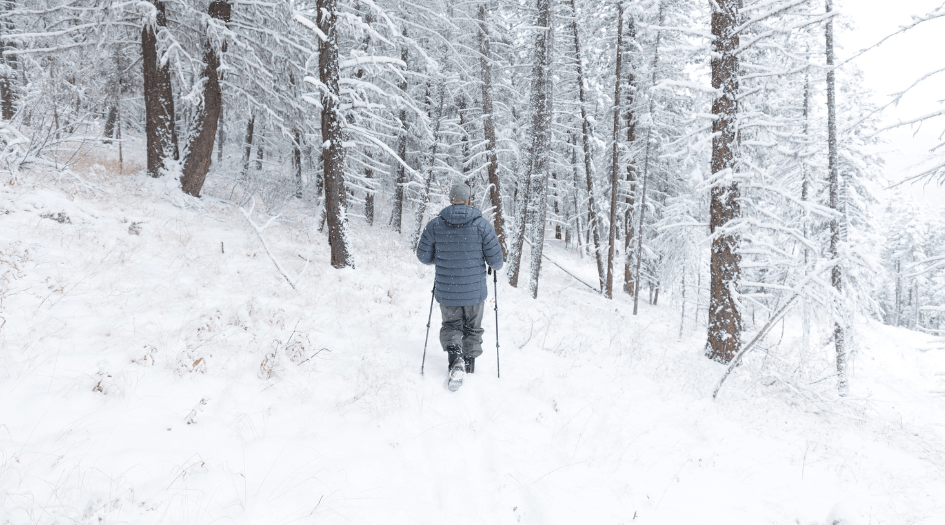
Winter is a perfect time to explore the great outdoors. No bugs, crisp temperatures, and beautiful winter landscapes can provide ideal conditions for a daytime hiking trip, but you must be ready for frigid and sometimes harsh weather conditions. Follow this packing checklist to make sure you’re properly prepared for your next winter hiking trip:
-
Layer up for freezing weather conditions. Winter weather can be unpredictable. Very cold mornings, even colder evenings, strong winds, and blowing snow can all occur within one day, so layer up with clothing made of breathable wool, fleece, and synthetic materials to keep you comfortable. Here’s a quick packing list of some layering essentials:
- Long, thermal underwear
- Wool shirt or sweater
- Wind-resistant and waterproof winter jacket and splash pants
- Winter hat
- Balaclava or neck warmer
- Mittens and gloves
- Thick wool socks
- Sturdy snow boots
-
Stock up on the snow gear. Deep snow and ice can add an additional level of risk and difficulty to even the easiest of hiking trails. Make sure you have the right gear to help keep you safe while you navigate the snowy paths:
- Tinted goggles or glasses
- Traction devices for your boots, like crampons
- Snowshoes
- Ice pick or axe
- Trekking poles
-
Bring lots of snacks. When thinking about what food to bring for your winter hiking trip, choose high-calorie snacks with plenty of carbs and good fats. These will keep your body fueled as it works extra hard to stay warm. Along with packing lots of water, prepare some of these simple snacks ahead of time to enjoy on the go:
- Dried fruit and nuts
- Bagels and breads
- Small sandwiches
- Jerky and cheese
- Cookies and snack cakes
-
Stock up your first aid kit. Bumps, bruises, and cuts are possible during any hiking trip, so make sure you pack a fully loaded first aid kit, complete with:
- A variety of cloth and waterproof bandages
- Sterile gauze pads and adhesive tape
- Antiseptic wipes
- Lip balm and sunscreen
- Antibacterial ointment
- Pain relief medication
- Antihistamine medication to treat potential allergic reactions
-
Put together an outdoor survival kit. You never know what can happen while you’re on the trails, so it’s best to be prepared in the event you get separated from your group, are lost, or are injured. Pack these safety essentials just in case you’re forced to face the elements longer than expected:
- Map and compass
- Waterproof matches, lighter, and fire starter kit
- An emergency shelter, including a tarp
- A headlamp and extra batteries
- A loud whistle or flare gun
- Extra food and water
Now you’re ready to enjoy the great outdoors all year round and if you’re heading out on the road for your next snowy adventure, check out these tips for a safe winter road trip.
Related Blog Posts
View All Blogs
-
 November 27, 2024
Ice safety: Precautions to take before going on a frozen lake
Before lacing up your skates and stepping out on a frozen lake, follow these simple precautions to stay safe on the ice. -
 October 16, 2024
How to pack for a safe fall camping trip
Camping doesn’t have to come to an end just because summer does. Learn how to properly pack for a safe fall camping trip. -
 August 21, 2024
Prioritizing your mental health after a natural disaster
Self-care is just as important as taking care of your home and car after severe weather. Follow these tips to prioritize your mental health after a natural disaster.
find a broker near you
Are you a group insurance customer? Contact your group’s administrator or broker.