

Coverage for your vineyard-owned delivery trucks and vans can be quoted alongside your Property and Casualty insurance.
Winery insurance and so much more
-
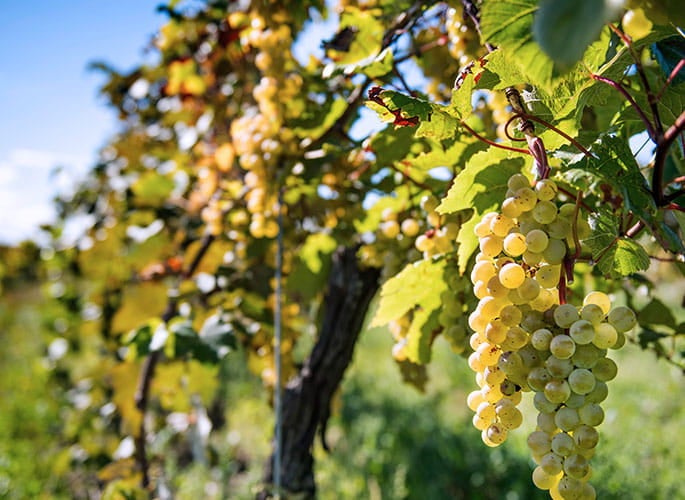
Grape and wine stock
-
Cars, Vans & Trucks
-
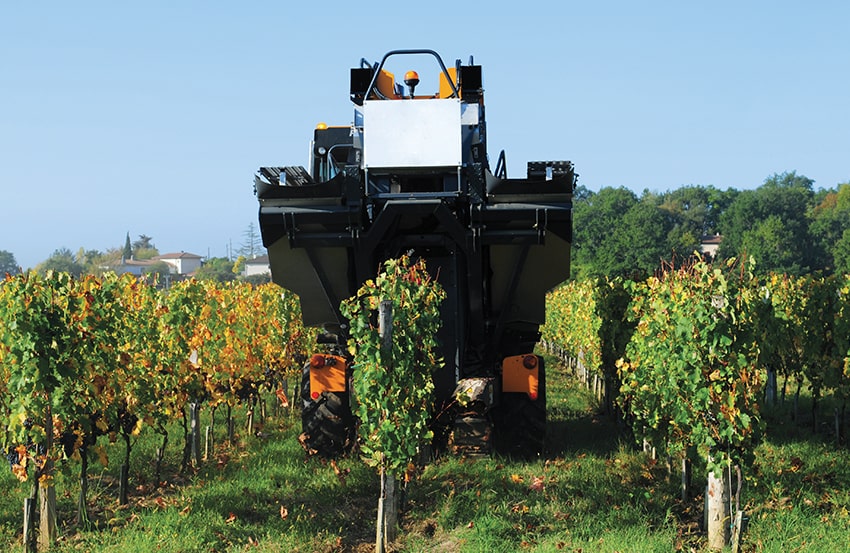
Machinery
-
Liability
Founded by farmers
We’ve been putting Canadian farming families first for more than a century. We’re proud to protect your way of life with customized insurance solutions for your home, cars, trucks, machinery, and operations.
FAQs
If your home is also on your farm, your standard homeowner’s insurance policy covers small, detached structures such as:
- A detached garage that is used to park your car/truck
- Pump house for the pool
- Small garden shed
- Gazebo
The following types of outbuildings are built for or used for farming or commercial operations and are not included in standard home insurance policies and must be insured separately, at an additional premium:
- Any building that was built for or used for any farm use
- Detached garage that houses a farm tractor (or any other farm use)
- Barn that is no longer used as a barn (just personal storage now)
Coverage for outdoor trees, lawns, shrubs, and plants
This coverage is specific to the landscaping around your dwelling — not the bush lot on the farm. Landscaping coverage for homes located on farm properties is limited to a maximum distance of 100 feet (31.35 metres) from the house.
There are also other limitations that come with operating a business (your winery) on the premises.
We offer two forms of coverage: basic coverage for fire, lightning, and wind; and broad form coverage for everything (unless specifically excluded).
There are three claim settlement options. Depending on the age, use, and condition of your buildings, all or some of the following options may also be available to you:
- Actual cash value — the replacement value less its depreciation:
If your policy is set up to cover the actual cash value of a damaged or lost item, it means you’ll be paid the dollar amount that the item is worth today. This is based on the original purchase price (less depreciation) and the item’s physical condition on the day it was damaged or lost. So, if we need to pay out the actual cash value of your 20-year-old golf clubs, we’ll determine what someone might pay for a similar set of 20-year-old golf clubs in the same condition today.
Check out our blog to learn the difference between actual cash value and replacement cost.
- Replacement cost— the cost to replace your building with a new construction (no deduction for depreciation, subject to your policy limit):
An item’s replacement cost is the dollar amount you would need to purchase a new item similar to the item that is now lost or damaged. If we are planning to pay you the replacement cost of your totaled two-year-old tow truck, we would find out how much it would cost to buy a new tow truck of comparable quality.
Want to learn the difference between replacement cost and actual cash value? Visit our blog to learn how both calculations work in real life.
- Utility value — this is a term unique to farm insurance and is often used with large, older buildings that are not being fully used for what they were originally built for. With utility value, you can receive the value for what it would cost to replace the building based on its present use. This is commonly used with grain elevators and older two-storey bank barns, where the buildings are not being used for their original purpose.
Any equipment that is attached to the building is NOT considered farm machinery — it’s insured as “building including equipment.” For all other farm machinery, these are your coverage options:
- Choose one blanket limit — if you pick this option, all machinery must be insured
- List only the specific machinery you want to insure
- List the larger equipment and "blanket" the smaller items (valued at under $2,500 per item)
Farm machinery is settled on an actual cash value basis at the time of the loss, but we’ll agree to waive any depreciation value on qualifying machinery that’s up to 5 years old (60 months). Partial losses are covered for the cost of repairs without deduction for the depreciation of parts.
Our definition of winery produce includes harvested grapes and other fruit used for wine-making, wine in its various stages of production, unsold stock that includes wine or produce, and sold stock of wine or other produce. Stock, whether it be wine or produce, includes ingredients used in the making of wine, such as yeast, sulfur dioxide, filtering materials, clarifying agents, chemical additives, cleaning and disinfecting solutions, as well as materials used in the bottling and packaging process.
Business interruption exposure for wineries is significant, as a fire, accident, power interruption, severe weather, or mechanical breakdown can lead to grape or wine spoilage and a significant loss of income.
When an insured loss occurs, physically damaged items are very likely to be covered. But without coverage for business interruption, you won’t have protection against lost income because of the damage.
For example, if there’s a fire, your buildings, production equipment, and winery produce are typically insured and will be replaced. But the time required to grow grapes and stock is significant and could eliminate an entire year of production, meaning you won’t be paid for your finished product during this time. At the same time, your expenses continue; things such as taxes, heat, hydro, and salaries of employees you wish to retain.
Although optional, we strongly suggest adding business interruption coverage, as it can replace lost income for up to 12 months after an insured loss.
Contingent business interruption
Contingent business interruption coverage may also be necessary if your winery purchases grapes from other vineyards or independent grape-growers. If your supplier experiences a business interruption, you’ll be protected from any financial impact to your winery due to the supply issue. Contingent exposure decreases significantly if your winery has access to alternate supply sources.
Farming is not just a business — it’s your way of life, and it’s where you live. Your winery requires unique protection against a variety of liability exposures, including products liability if contaminants or foreign objects are unintentionally added to the wine. Depending on your province or territory, liquor liability may be required if a third-party is involved in an accident that leads to bodily injury or property damage due to the overconsumption of alcohol on your premises.
Having the right liability protection in place is extremely important, and that’s why we can cover your personal, farm, and commercial liability needs on one policy. Depending on your operation, we may be able to offer liability limits of up to a maximum of $10 million.
Brokers that make all the difference
We partner with independent insurance brokers so you can make an informed decision based on unbiased advice. A broker will take the time to understand what works best for you, your winery, and your budget, and they’ll help you compare products and pricing.